Showing posts with label Books. Show all posts

Sunday, September 5, 2010

The most destructive, despicable, yet truthful love story of the 20th Century


I decided today would be the day I would continue writing about my adventures while traveling. For the most part, I have only been to Honduras and I lived there for two years. While in those two years, I encountered some wonderful and frightful events that led to me returning home to the place that is safe and comforting. While I live my life, I also enjoy reading the classics because there is nothing like learning from the most intelligent and crazy people that have ever lived. In this case, I chose to read "Lolita" by Vladimir Nabokov because it was my time. The things that happen while I live my life lead to the exact moment that I am in today. I shall explain later how such a relationship ties in to my life and my passions.

A brief description of the story of "Lolita" is as follows... Humbert Humbert has a fascination with young girls. He calls him "nymphets" in that these young girls are starved for the lust of older men, but they do not know it yet. When he leaves his native France to the States, he meets a woman with whom he is to spend the summer with. At first, he is extremely disappointed because his intentions were to go with a family that had a little girl living with them. But as he soon discovers, he meets the daughter of the woman he is to spend the summer with, and this is where the story truly begins. Dolores Haze becomes this infatuation, obsession, love that Humbert can not escape. As he fills his days with this nymphet, he begins to write about her in his journal in hopes to pacify any urges that might bring him to insanity. He calls her his Lolita and wishes that one day he will have his way with her. Her mother sends her to camp and wishes to marry Humbert in hopes of finding the man she truly loves. They get married and while he pretends to love the mother, he is more infatuated and obsessed with the idea of bedding Lolita and making her fall in love with him. Lolita's mother soon finds out of her husband's infidel ways of thinking, so she runs into the middle of the street, gets struck by a car and is killed instantly.

Destiny falls into place and now Humbert collects Lolita from camp and they begin their journey of love, lust, perversion, and attempt to create their own normalcy. To end matters, Lolita runs away and marries, Humbert kills the man Lolita ran off with, and ends up in prison for the rest of his life.

I decided not to discuss too much into detail the perverted events that took place while Humbert and Lolita were together because I am not a fan of pedophilia nor do I want to talk about it. But the one thing I will discuss is the ability to love something or someone even though the circumstances can seem completely ridiculous and often times criminal. When we fall in love, regardless with whom, we see nothing but the passion we feel for that person. Everything comes second and you will do anything to be with this person. I myself have endured years of this passion. I gave my life to a passion that was insurmountable, I could barely breathe just thinking about it. It was as if I put a pause on reality in order to feel one more second of this obsession I felt because it fulfilled me entirely. I believe this is how Humbert felt when he got a hold of his Lolita. It was a love so profound that nothing, not even the court system could stop him from getting his goal. I can only give vague details of the life I have led because quite frankly, my life is just one of the many lives that go through these circumstances. And while I hope that you all get this opportunity to feel the love I felt, I also hope you understand the big sacrifice you are giving. You are no longer the person that you thought you were. Your tolerance for pain grows stronger as you begin the road to disappointment. I say disappointment because this love so passionate can only lead to only place: extinguishing death.

I have misplaced my book so I cannot share my favorite quotes with you. I don't think it's necessary anyways. I just think now the reason why I read the book was to compare my life to the life of Humbert. I compare myself to him, and not Lolita, because my Lolita refused me just as much as Humbert's Lolita did. So now that I am at this place wondering all of the choices I made in hopes of finding some answers, I can only say that I loved through and through. The one thing that I have learned from my years of passion is that I do have the ability to love unconditionally. Did I learn how to control myself? No. I think I will always be that girl that engulfs herself in her passions. I think it's the only way to live; to love and to feel everything because then do I feel like I have truly lived the life that I was meant to live.

To end this post, Lolita can be called despicable; Lolita can be called atrocious. I call Lolita the greatest love story ever told simply because the circumstances do not mean anything when it comes to the love and devotion you feel for someone that you've profoundly connected to; there is NOTHING more important than to have that person in your arms at every moment, every breath, every word. I have had the privileged of experience such profound love. While it is destructive to the individual self, nothing can compare to the true feelings felt when falling, and I do mean FALLING, for someone this hard. The worst part about it is having it taken away, as it will most certainly be taken away. But for the mean time, I will do nothing but enjoy the fruits I have been given.

Saturday, August 21, 2010

"Lonely, I'm Ms. Lonely..."


When I hear this song, I think about the life I left behind to come back home. My mind changed the moment I got on the airplane, but sacrifices are what make us stronger.

Coming home has warped my mind in many different ways. You see things are the same. I have my room. I have my family. I have everything that I left behind the first time I left the nest. But things just seem different. Everything is different. I am different. And as much as I would like things to be the same, they are not the same.

I remember reading "One Hundred Years of Solitude." I always thought of myself as Aureliano Buendia because he was a miserable person with a calling. He was a general for the liberation party in war with a regime. He was a master at his craft, and he left his family to fulfill his destiny. In the end, he ends up making gold fishes all by himself with no real human connections or feelings. All it ever got him was a lack of compassion or real feeling of connection with humanity. I think of myself in that way simply because in the end I am alone. And I may travel the world, I may make all of my dreams come true, but nothing changes that sad fact of life. So for the mean time, I will continue to accomplish as much as I can and know that I am the only one who can do it for myself. So I am lonely. I'm Ms. Lonely.

When I first saw my family, I was speaking to one of my cousins. She mentioned that I looked sad in all of the pictures I took while I was away. I found it completely ridiculous for this person to know anything about how I felt while I was gone. She didn't even ask me what I did over in Honduras, yet she had this understanding that I was miserable while I was away from my family. To be honest with her and you, there are things that make me sad that will never change regardless of the location of my body. I will always have things in the back of my mind that will make me reconsider every single choice I make in my life. But the truth is that I was very happy living my life and doing EXACTLY what I wanted to do. What I found sad at the moment was the fact that this person was living an empty life full of plastic surgery and drama. Yet, I am the one that "looked" sad. Maybe my eyes are just that way and you've offended me. But of course, they can say what they like and I just sit there staring and judging. C'est la vie.

Wednesday, July 21, 2010

"In the following pages I offer nothing more than common sense."


So I started reading Thomas Paine the other day because that's what history grads do, and wanted to just stop. I felt it too "old time" for this kind of world, but then I began thinking about what the possibilities are for someone to create a new idea on "common sense." The times of monarchs are gone, so this idea no longer applies to our world. Would it even work?

Thomas Paine has been remembered as one of the radicals of the American Revolution and his writings impacted it greatly. Some say he was the catalyst for the sentiment of freedom to be felt throughout the thirteen colonies. The pamphlet sold over 150,000 copies at a time where men were the only ones, generally speaking, that could read. Some say he was one of the founders of the American Revolution, with the likes of Jefferson, Franklin, and Washington. His "common sense" had that much of an impact for their time.

Thomas Pain was a great writer. He took the ideas that people spoke during revolutionary times and was able to provide an understanding to the masses that proved necessary for revolution to occur. For Thomas Paine it was also essential to live in this time in order to write this lovely pamphlet because it was "destined" for it; I do mean the pamphlet. Now we ask ourselves what was so important about the pamphlet and how can we apply it to our lives? Everything in life is connected, so let's see what we can find.

The first section is titled Of the Origin and Design of Government in General. With Concise Remarks on the English Constitution. Just to give you a little idea of Paine's opinion on the government, "Society is produced by our wants, government by our wickedness; the former promotes our happiness positively by uniting our affections, the latter negatively by restraining our vices" (pg 6). We come to find that we govern ourselves according to two sets of laws: society's laws and government's law. In this case, Paine points out that society is responsible for designing our "civilization" providing ideas for growing and "creating." On the other hand, government is solely responsible for "maintaining order" by providing discipline on situations that may be too much for society. While society allows you to grow, government limits you.

Furthermore, the government has sections that correspond to responsibilities in order to create a more "balanced" view of society. With regards to the English government, it has three branches of government, the Commons, the Monarch, and the Lords. While responsibility lies on the fact that all will participate in government affairs, calling themselves a "republic," common practice was that the king decided everything. Now Paine makes the point that the English government in itself is completely contradictory. The purpose of the republic is representation in the government and a limited government. But, the king is still the one responsible for making all of the decisions, especially when it comes to the thirteen colonies. Now we come to the point where we see why there is so much negative sentiment for the English government. They are hypocrites. They show a republic, but all of it is a puppet show for the King to rule everyone.

The second section is titled Of Monarchy and Hereditary Succession. Now for a long period of time Paine was considered to be an atheist because of his radical views. This section completely refutes that for the purpose that Paine actually believed in the Bible heavily, and he quotes it a number of times in order to show that hereditary right is completely ridiculous. According to Paine, the idea of a monarchy was first introduced by the Heathens, and later adopted by the Jewish kingdom, which was later brought to Europe. Hereditary rule goes against the laws of the bible because every man is born the same way, so by definition they are equal. It also goes against the laws of society because a position of public honors has to given to you by the public, and nobody is born with that right. He makes the point that hereditary monarchs are not common sense because they pose more problems than they solve. (Anyone remember how well a child king rules?)

The third section is titled Thoughts on the Present State of American Affairs. According to Paine our goal is to reach posterity, which is succeeding in future generations collectively. The state of American affairs are leading to this goal, but there has to be a fight for it. The English are prepared for battle, and so are the Americans. Paine first begins to describe the relation of America with Great Britain (GB). He states, "I have heard it asserted by some that as America hath flourished under the former connection with GB..." In order for America to be in the place that it was, it need the English because it brought them to the point where they wanted to be independent. But, to continue with the quote, "...that the same connection is necessary towards the future happiness, " (pg 20) is nothing more than fallacious. In essence, there comes a point in time where there is a need for independence from the "motherland" especially when it has been treating you badly in the last couple of years. There was plenty of petitions and talks about the problem, but nothing was ever solved, so to eliminate this relationship meant establishing a new one that wasn't so controlling. Paine believed that America was finally ready to become an independent country.

There is one more section, but that can be skipped since it talks about abilities to win the war.

So, to answer my questions, is there a possibility for a new Thomas Paine to come out with a new "Common Sense"? I think so. There are so many battles to be fought throughout the world with the words used by Thomas Paine. His ideas are universal in that they correspond to anyone who wants to have the right to choose. Now could it be worded differently, ABSOLUTELY! We are no longer in 1776 and our language has developed greatly.

I think that if I were to pick a topic to write about, I would pick immigration. We as a country have lost the ability to think rationally when it comes to this topic because we are so focused on protecting ourselves from threats around the world. But immigration is our right as human beings. We can go and live wherever we like because this is our planet. The government has made it almost impossible for people to move around because of the control that they have for the "borders." While we increase in population, we also deal with the fact that Earth is changing because we have not taken good care of it. There will be a need for immigration once many of coastal places get sucked in by the rising sea level. Problems will arise from this if the government continues to show a strong stance against immigration. Wars will be fought because there will be a need to move. Now I am talking about some hypothetical situation, but I do think there is a need to address this issue eventually because we we'll have to suffer the consequences if we don't.

Just a thought, but I am not going to get carried away. If I were to write a "Common Sense" I would be more articulate, right now I am just babbling. Have fun!

Reference: Paine, Thomas. Common Sense and Other Writings. New York: Random House, Inc, 2003.

Saturday, July 10, 2010

Back from Hiatus...

Hello everyone and welcome again to the Travel Companion...

I truly must say that I have not been inspired to write in my blog. I stopped because I started working at my craft, and I just lost interest in writing about my experiences in Honduras in conglomerate with the books that I read. I still want to write about books, but less about them and more about me. I guess the blog is the new way in which an ordinary person can write their feelings, as oppose to a journal, but now share it with the world. I am not sure I want to share such personal feelings, but then again, I could care less what anyone thinks of me. So lets continue on and see if we can reach a new level of fame...


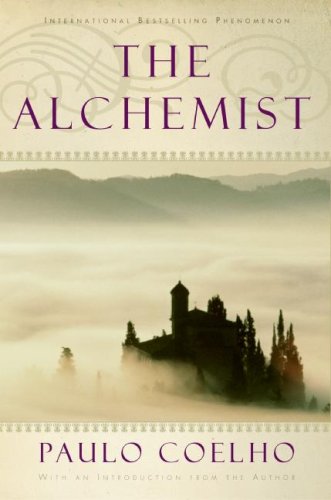
As recently as yesterday, I finished reading the book "The Alchemist" by Paulo Coelho. To give a brief summary, this is the story of a boy named Santiago, who lives on the plains of Andulusia in Spain and herds sheep for a living. He begins to have vivid dreams about a treasure awaiting him at the Pyramids of Giza, in Egypt. He soon begins the quest to find this treasure, and in essence, find himself. The book calls it his "Personal Legend" where every living being has one and must attain it in order to reach the true purpose of one's life. Through trials and tribulations, the boy finds the love of his life, and he finds out that the journey is in essence the personal legend finding itself. He also finds his treasure in a place that he least expected to find it, but you need to read the book to find that one out.

This is the first time I have come across a book of spirituality that I have been able to read. I am not a big fan of religion, and have no real concept of spirituality. I will say here and now that my religion is the freedom of the human being, written in the US Constitution, and my spirituality is based on the ideas of possibilities. My mind is open to endless ideas about the world, but I choose to embrace them as theories, and not concrete facts.

To begin my discussion of this book, I must say that I really liked it. Coelho has a very interesting take on the world and his surroundings. Everything is one, and everything in essence can speak in one language, the language of the heart in the soul of the world. Because we can all speak this one true language of "life," we all function in a similar way. Some living thing, like a single-cell organism, has a purpose to live as a single-cell organism. That is its "Personal Legend." The bees that travel many different planes to find pollen for their nest and cultivate their honey is their "Personal Legend." Every SINGLE living organism in this universe is connected in the fact that we have a purpose to fulfill in our lifetime.

As human beings, we are truly complex creatures with millions of thoughts and feelings that allow us clarity or mist through our paths of self-discovery. Because of the fact that we have created our world based on what we need, we have alienated the surrounding creatures that give us the answers so many of us are desperately trying to find. Coelho uses the term "omen" to describe these signs we seek to guide us. An omen is anything perceived or happening that is believed to portend a good or evil event or circumstance in the future; portent. An omen is also a sign of the language of the heart guiding you on your path to your "Personal Legend." I call them a gut feeling, but there is definitely more to it.

When reading the story, I found it very curious that most of the omens came from other living things, like butterflies or hawks, and it made me wonder how many signs I've been missing while on my path to self discovery. What we often forget is that our lives are all connected by the simple fact that we are alive. Everything on this planet has that one thing in common, and it always the most difficult thing to understand between one another. We see ourselves as different, but the energy that is "life" is in all of us, and it that sense, we are capable of finding our way through life by looking at the life surrounding us and know that although we are one individually, WE ARE ONE COLLECTIVELY. That means that searching for your true path means searching with every other living thing that is searching for theirs. We are not alone, and we can use the symbols and living things around us to find out a little about ourselves and about life.

In order to find one's "personal legend," one must know what that personal legend is. How do I find that out? By looking into your dreams and wondering about yourself and the world around you. Why is it so easy for the bees to find their purpose, but yet so many people all over the world live in complete depression without realizing their true potential? I don't know. I was like that for a period of time where I felt completely lost. I did not know who I was nor did I know what I wanted to do. I forgot about myself and it took me 8 years to realize that I was on the right path to my self discovery, and this was a trial and tribulation for it. When we realize what our path is to discover who we are, we realize that every single problem in our lives has been sent there to test the fact that you will become your personal legend. You see, I've always wanted to be a lawyer. Every since I can remember I wanted to be right all of the time. For a while though, I thought of myself as completely lost and useless. I felt I was a joke and an inconvenience, so I chose to leave my surroundings to find something different. I took the journey of a lifetime to Honduras, thinking that I would find a new home in this country. What I ended up doing is testing myself on the complete limits of my capabilities. I also extended my capabilities to endless possibilities. I now FIRMLY believe that I can do anything that I set my mind to because all of the trials that I have gone through brought me back to my personal legend of becoming a lawyer, well more specifically law professor for I have found an AMAZING passion for teaching. So again, I think I was just able to see, and so many people see while others get lost in the trap of suffering and complaint, which could be the reason they never find themselves.

It's pretty fascinating to me to have this mentality because I am truly grateful now to all of those great ones and assholes (won't mention any names) who made life possible and impossible for me at times. Thank you for your genius and idiocy and I hope you find your own personal legend.


Monday, March 1, 2010

"english speaking zone"- part one

"The reason I'm going into everything that happened in San Francisco is because it ties up with everything else all the way down the line." -Sal Paradise


My first day of school and the rest of my tenure was something worth celebrating. I had arrived at my destination, and unlike Kerouac, I had my reason for travel with me. I was able to obtain a decent job with medical benefits, and a place to stay. I thought it was something worth celebrating, but the circumstances of my job soon unraveled in ways unexpected and down right crazy!

Coming in to the outdoor auditorium/gym, I could hear the loud buzzing of the students chanting their daily mantra of gossip prior to their daily prayer. It was mandatory that everyone join in and share their faith with others. Of course, I would prefer to get on with the daily activities, but that is another blog all together.

After the prayer, the national anthem is sung by all of the students. Again, this is going on during the first period of the classroom, roughly about 15-20 minutes total time. The rumbling of the students takes about five minutes to subside, and we begin, "Tu bandera...." It's a beautiful anthem, but it's quite unnecessary to ramble it every single day, as most of the students did. Once finished, the lovely director, which will be named a "miracle," comes to the stage and introduces the new teacher: Mrs. Melgar! Now, I am not married, so how do I come up with this fabrication of the "Mrs"? I have to keep up appearances at school, and to avoid any misunderstandings, I am married with Mr. Melgar. So very antiquated...

Now that I am introduced, I am given my books (yes, the same day I start) and sent my way to my first classroom. I taught a combination of different classrooms in various grades. To begin writing about my tenure, I can only say that I truly wanted the best for my students. I was ready and willing to devote my time and make sure my students were successful. Unfortunately for me, nobody told my principal of this, nor my students, so I was in for the ride of my life.

A key component to successful teaching is classroom management. I had absolutely none! Imagine a typical day in a class, say Sociology,

"The noise of the students continues in an uproar as the teacher attempts to write the notes on the board and have the students write it down prior to having the lesson start. All of the students are sitting with their faces against the board, speaking in a Spanish that the teacher has never heard. As the teacher asks the students to begin writing their notes, 85% of the students get up to get their notebooks, not even ready and five minutes have passed. Another ten minutes are used to have everyone obtain their materials for "learning." Once they have their notebooks, they begin to ask for pencils, pens, anything they can get their hands on for writing. Two or three students get up and walk around for another two minutes asking everyone for a pencil; and anything else they can think of, only finding one on the desk they left. And the lesson begins, about 15 minutes into the period. Throughout the hour, reprimanding students for speaking without permission is constant. Cell phones are passed around, and notes are thrown. Some students get up and use the restroom, without permission; and some fall asleep, only being 8:30am. As the classroom time finishes, many of the students did not write their notes, and the teacher leaves feeling hopeless and desolate."

This would be a daily occurrence in the classroom and throughout the school. Students, especially in a particular grade, had absolutely no sense of respect for an educational institution, and it was because of the principal. I have taken the blame for all of the faults I had while teaching at the school. Yet I will not take responsibility for that's school's failure. This chaos has been run that way prior to my arrival and it remains the same today.

I say this with the utmost respect, but the principal of the school set up her school so that the students had very little opportunity for success. There are no rules in the school. Children do as they please with very little consequence. An example of this would be the time that two of my thirteen year old students were caught ditching in school property. They chose to not attend my classroom and hung out in the building that was being constructed. As a responsible teacher, or so I thought, I found the students and sent them to the office. These two particular students had already been causing problems at the school, so I asked the principal to contact their parents and possibly even have them suspended for the day. I certainly did not want them in my classroom. The next day, not only did they come back into my classroom, but they taunted me with the fact that they got away with it and continued to fail in their classes and in their lives.

It was impossible to have the students complete their assignments, but more impossible was failing a student, even if they did NOTHING. Paying for the tuition meant that students were guaranteed a diploma at the end of their run. Grades, participation, and behavior were all additional circumstances to the grade, but the MAIN component is money. Students knew this, and took full advantage of the situation. I have one specific example where one of my students, no name mention, received a 54% in my Reading class. He did not turn in his final project, an essay on your favorite book, and so he failed in my eyes. He begged me to change his grade, and gave me excuses, but I said no. It wasn't about the essay only, his overall performance was beyond a failure. So to conclude my example, the next day I see the assistant director changing his grade in front of my face, so that his grade was in the 70% percentile. To make matters worse, the student is dictating to the assistant what he wants for his grade. I was shocked, appalled, embarrassed, undermined, humiliated, and disturbed, among many other things. I asked and continue to ask myself, "How can someone live with themselves knowing that a student is learning how to avoid consequences from the person that's suppose to enforce them?"


Kerouac also had his first travel job in Mill City, CA. His friend, Remi, got Sal (Kerouac) a job as a special policeman. It seems appropriate that both of our job had something to do with dealing with other people, and children at that. His responsibilities began with his, "...flashlight to illuminate my way; I climbed the steep walls of the south Canyon, got up on the highway...scrambled down the other side, almost falling, and came to the bottom of the ravine." This passage way led to barracks filled with "overseas construction workers." As his main job, he had to make sure that, "They didn't tear the barracks down." Most of these men were running away, as he puts it, probably from the law, so one can assume them to be trouble makers.

And soon we come to find out the making of their trouble the night Sal is working alone. The construction workers decide on that great night to get drunk, and so began the tumultuous chaos. As Kerouac explains, "Men were shouting, bottles were breaking. It was do or die for me. I took my flashlight and went to the noisiest door and knocked." The conversation that ensued reminds me of the conversations I would have with my students.

"What do you want?"
I said, "I'm guarding these barracks tonight and you boys are supposed to be quiet as much as you can.
They slammed the door in my face. I knocked again. "Listen, I don't want to come around bothering you fellows, but I'll lose my job if you make too much noise."
"Who are you?"
"I'm the guard here."
"Never seen you before."
"Well here's my badge."
"What are you doing with the pistol cracker in your ass?"
"It isn't mine. I borrowed it."
"Have a drink for christ sakes."

My comparisons are pretty obvious, but I will explain how I came to the conclusion that Kerouac and I had similar experiences with our first travel job. First, there was NO respect. With a few exceptions, there was no respect given to the teacher/special policeman. When I had to enforce anything, like a suspension, it was met with complete shutdown and mockery. When Sal attempts to bring down the noise level, the door is slammed on his face. Once he finally gets in, instead of following orders, they ask him to get a drink, as to say "If you can't beat them, join them." It's as if there is no authority to bring this group to a place of respect. Both of us dealt with the fact that the only way people will get respect is by joining them, and not beating them.

Another item that I took from this was that there is NO authority to bring this group down; which is one of the many reasons why there is no respect. Neither the sheriff nor the principal can honestly bring these kids down, so there is no reason for them to behave. To add to this argument, specifically, the only person that will get in trouble, on both fronts, regardless of the outcome, is the teacher/special policeman. They take the responsibility and they get paid, so they can also get F**KED in the ass.

Although we felt different about our responsibilities, our outcome was the same regardless. I would work long hours and fight everyday with my students, feeling exhausted and hopeless. Kerouac got drunk and posted the US flag up side down, feeling exhausted and hopeless.

To bring everything together, my only concern was the fact that we were failing these kids every single day, and not in their grades. I was unable to give my best because that would conflict with the true philosophy of the school, which can be described simply as the "english speaking zone." It is an inside joke between the people that experienced this horror unfold before them and myself, but we can't help but feel the sadness that occurred daily at that school.

The system was completely broken, and the living situation turned out to be completely disastrous. Because I lived at my school, my landlord was my principal. I blame my departure of San Pedro Sula on her, and this would be the reason. My principal did not like me. My principal hated Carlos. This is the kind of hate that can only be described as pure. I mean no empathy whatsoever; the way you see a friend whose stabbed you in the back.

Kerouac also encounters problems at his home while he deals with extenuating circumstance. Stay tuned!

Sunday, February 21, 2010

Albert Einstein- The Road to San Pedro Sula


When I last had left Honduras, I was on the verge of a mental breakdown. My mind was compounded by change in a way that I had never felt before. I needed to be there and I needed to be there at that moment...

In a desperate attempt to return to Honduras, I came across an ad on a teacher website, and the words "Albert Einstein International School" came popping right in front of me. They needed English speaking teachers in the industrial capital of Honduras, San Pedro Sula. The qualifications were easy to handle (English speaker, college degree), so I contacted them and within a week I was back in Honduras as the high school teacher of the Albert Einstein International School. I had a purpose, and Kerouac's purpose led him to Mill City, outside of San Francisco.

Kerouac's journey led him to Mill City, outside of San Francisco, where he was to meet with his friend, Remi Bonceaur. He described it as, "...a collection of shacks, in a valley, housing-project shacks built for navy Yard workers during the war; it was in a canyon, and a deep one, treed profusely on all slopes. It was, so they say, the only place in America where whites and Negroes lived together voluntarily; and that was so, and so wild and joyous a place I've never seen since." The way in which Kerouac describes this place almost seems magical. It is a place that he has never seen before, and a place that has never existed before that moment when he lands. The way in which the homes are characterized seems like a "collection of shacks" almost seems like their is a distinct quality in the area that deserves to be preserved and remembered for eternity. Furthermore, the fact that it is the one place in the nation where integration exists, just makes it even more magical. San Pedro Sula was my Mill City. Although there weren't many racial problems in this time, there are many other social injustices that makes this place special to me. Some place I never thought existed.

I was greeted by my Dean, Carlos, my neighbor, Natasha, my principal and her sister. As I headed for the city, I could only imagine what kind of work I would have to do. I had never been a teacher before, and I hate kids, so this seemed like a really BAD idea, but it was the easiest and fastest way to get "home" to my man. My trip to Honduras began with following this one person, like Kerouac's trip began, but as I began my own journey, I was able to acquire this sense of self that I had lot a long time ago. Let's get back to the experience, though.

Traveling through the main highway of Honduras gave a sense of unity to the place. "Colonias" were scattered throughout the exterior with the "busitos" driving along and getting robbed. One of the highlights of the travel was the water park "Zizima." Coming out of the airport, one can feel their hair frizzing up and your chest beginning to sweat. One of the awesomely disgusting things in Honduras is the constant sweat. One can be getting out of the shower, and automatically sweat will drip out of your body, causing you to want to shower again. But it was bathtaking traveling through the greenery of the many fields. One thing Honduras is beautiful for is for it's scenery, for the most part.

As we drove into the city, it was wonderful to see the way the United States had influenced Honduras. In typical fashion, we had our Mc Donalds, Wendy's, Burger King, Pizza Hut, and even Tony Romas at the state-of-the-art "City Mall." I was home again, but without the vanity of celebrity. Yet in my moments where I felt like I was "home," I felt that it was this different home; a home in another dimension that looks the same, but the people are not, and the principles are not, and the world is not the same!

Passing the train tracks, my principal advised us not to go past the tracks for safety reasons. I remember instinctively the many times I was beyond the train tracks. While living in El Porvenir, Carlos and I would take the beat up school bus into the city to spend the day trying to find some cheeba and trying to find something to do. I realized at that moment how overtly cautious everyone was due to the crime rate, and how ridiculously incautious we were. Personally, I never got robbed and I felt quite safe in the city.

The journey led me to see the "Parque Central," where you have a combination of students, drunks, crackheads, protesters, advertisers, lottery salesman, Cinnabon, policemen, police vehicles with incarceration cells, prostitutes, little people, gays, bible freaks, state officials, and moms who breastfeed, among other fascinating people. It was quite the show, especially how confined the area is. Imagine a typical park with your swings, baseball field, basketball field, and if fancy, indoor area for more sports. In comparison, this park was about the size of half a city block with most of the floor being cement. There was a bridge, which was nice, but the river was a sewage pipe, for those interesting in watching the lovely water through the nonstop rainy season.

As we approached our school, it was surrounded by a big black gate with wired fencing to keep the hoodlums and robbers out. San Pedro Sula has a high rate of crime, and things happen everyday. Coming from the San Fernando Valley, this was definitely something I was not accustomed to, but I dealt with and I forgot. We will soon find out why there are wired fencing EVERYWHERE.

As we went inside of the school, where I was also living because the teacher dorms were located behind the school, I was told of the different areas. The classrooms were in the second and third floors. The main floor was the area of recess, lunch, and CHAOS! As we continued walking, I was told that I would start teaching the next day. I had no idea what I was teaching, no did I know how many students I had, nor did I know anything about anyone. My life at Albert Einstein had begun.


Kerouac encounters a similar situation where chooses to get a job as a special policeman. In our situations, we both have the obligation to uphold the law of the "land," and where our"badge," me as a school teacher and him as a policeman, with honor, but the circumstances surrounding our tenure can only be summed up with a new subject: Hell.

Saturday, January 30, 2010

Looking Through the Eyes of a Stranger

My time in Honduras would be short lived for the summer of 2008. I was going back and forth between El Porvenir and Los Angeles. On the one hand, I loved the idea of a new identity, new setting, new beliefs. But I was deathly afraid of having to stay in the "pueblo" because of the lack of security and hatred felt our direction. I was the privileged American who so happens to have parents from Mexico. Constant target.

During my time in the States, of which I was without my better half, I focused my time to work, family, and friends. I worked at some garage accessory place as a customer service representative. It was quite uneventful. Every fifteen minute break, I would go on my cig break. When my hour break came, I would walk around the Chatsworth area with my medication and my food. I found it enjoyable and humorous that I would get a full break from my job and think about my life in Honduras. It was the time when I first read One Hundred Years of Solitude, and I absolutely loved it. I would see myself as the valiant and lonely Aureliano. As I approach my time to leave to Honduras again, I would think of when I would come back. At that moment, time was completely uncertain.

My time with my family was limited. With my family, the judgments come like air. We always yell, we always mock, we always call each other names as salutes. I have always been a perpetrator of this, constantly calling one of my cousins a "fag," but i never realize how ridiculous it was until someone pointed it out to me when I would call them names. I felt low and ashamed. Completely like a embarrassed. And that was why I chose to keep away. Avoid problems, insults, gossip. I feel bad, but it was the only way to stand it for the time I was there. I now miss my family greatly, but I could not stand the negativity. The great thing about my time was my nephew, whose face is a ball of sunshine.

I had a wonderful time with friends. Ana and Victor were my life savers. Every night we would go out and get stoned till we could no longer keep our eyes open. They would carry a lovely tool that would always work at hitting the spot. We would discuss things in our lives that were for those we trusted. "I remember the time the assholes at my high school..." Constantly opening doors into our own trust with other people. We were confined to that blue mustang with oue ideas, tragedies, dreams, and realities. They were also the only ones that felt my choice to go was a wise decision, and wished me good luck!

While I was living this life in the States, I was also traveling back to Honduras in an attempt to assuage my desires for Carlos. As soon as I would arrive, I would see him waiting for me at the terminal with his cousin waiting to give me a hug. I was thrilled to come back each time waiting to see how things were different. Prior to this trip, I had lived and been only in California, so this was quite exciting. We would return to the simple home where there was nothing but what we had brought with us. We would spend our time outside smokin and chillin, and inside playing video games. I couldn't help but think how life would be like for me if I was born in El Porvenir. I would stay home with my mother and learn how to cook and clean. When I would turn fifteen, I would be pregnant and ready for marriage. By the time I turned nineteen, I would have two children and be in the process of divorce. Life was much faster, but yet completely dull, simple and slow. More than half of the people had not left their homes, like myself until that point. How different could my life had been, but yet how frighteningly similar .

I remember looking at myself in the mirror at certain points wishing I would have a constant in my life. I didn't. I would return to Los Angeles crying until my eyes had no tears wishing that life were simple in Honduras and I was with Carlos, like in California. But things were not easy. Thing were changing. I didn't know myself and I didn't know what to expect anymore. I didn't know if i would always travel back and forth or if I was going to find something that would work. I was scared and lonely. My mind was in a haze and I didn't know how to feel or what to do except plan for my trip back to Honduras.


I am sure that was how Kerouac felt on his journey to Denver and San Francisco. One of my favorite points in the book is when he traveled through Des Moines, Iowa. He states, "I didn't know who I was---I was far away from home, haunted and tired with travel, in a cheap hotel room I'd never seen, hearing the hiss of the steam outside, and the creak of the old wood of the hotel, and the footsteps upstairs, and all of the sad sounds, and I looked at the cracked high ceiling and really didn't know who I was for about fifteen strange seconds." Being outside of your element in strange surroundings changes the way you view yourself. In a way it is as if the old self is completely changed. Your habits and routines change. Your life changes to the point of no return. What is left is trying to figure out who you are and what this new person is going to do from then on. All I knew was that I was heading for San Pedro Sula; Kerouac was heading for San Francisco.

Tuesday, January 26, 2010

"and I shambled after as I've been doing all my life after people who interest me, because the only people for me are the mad ones..."


"...the ones who are mad to live, mad to talk, mad to be saved, desirous of everything at the same time, the ones who never yawn or say a commonplace thing, but burn, burn, burn like the fabulous yellow candles exploding like spiders across the stars and in the middle you see the blue centerlight pop and everybody goes, 'Awww!'"

So as I decided to leave California, my entire family thought I was going insane. But the insanity was only the beginning. My life has been about experience so far. I gave my best in school. I gave my best at work. I gave my best as a daughter, but deep down, my experience in California halted, so I decided to travel to the places that I learn from school. Some people know of my plan, A LOT don't, but I would love to travel the world and meet interesting people that have life figured out. Like Carlos Melgar.

Carlos Melgar was the my first reason for moving to Honduras. He is my partner, lover, best friend, companion, every fucking word to describe a pair of close people, we are. He is also inspiration. He chose one day to come back to Honduras and avoid the crap that immigration deals with. As he told me this monumental news, I was thinking, "He must be crazy...I'M IN!" Carlos was the factor that allowed me the possibility of seeing myself in another world. For Jack Kerouac, that person was his friend, Neal Cassidy.

Neal Cassidy was the man that convinced Kerouac to take his travels across the US, going to Denver as their first stop. Kerouac is not the adventurous type, but he is the type willing to be influenced by the adventurous type. As his approach to travel, Kerouac decides that he is going across country hitch-hiking to Denver from New York. In those times, this was considered the "Beat Generation," the future hippies of America that were first beginning to leave their parents' beliefs in search of something new, creative, interesting, and simply different. It was either debauchery, and cross country trips, or the white picket fence and the three kids. So the children of the 50's and 60's chose the former of the two because the latter seemed "sane". Kerouac chooses to head out for the "traveling season" with $100 in his pocket on this trip to Denver, and eventually to San Francisco, the mecca of the beat generation. While he is on this quest, he discovers "mad people" throughout with their own stories and ideas. I must say my trip has been similar in many ways.

As I left California, I had better luck with money ($1000) to get my trip going to Honduras, but the location was something that was simply not working. My trip began in the small town of El Porvenir, in the province of Cortez. If anyone does not understand what I mean by El Porvenir, imaging the burning of sugar cane and the closest groceries store 45 minutes away.


It was like a movie when we first arrived. The city-slickers moving into the small town where they are not desired. I was wearing my red and beige dress and high heels. Carlos was wearing a dark blue collared shirt, jeans and a brown blazer. Besides the setting, the mosquitoes were unbelievable. Our roommates were cool though. We have some pretty awesome geckos. Well we get to the house we are suppose to stay in, and I can only describe it as a basic home. I mean, we had a bed, a dresser, a refrigerator, a stove top cooker, and a sink. Our bathroom was a shower with cold water coming from a pipe, and the toilet. It wasn't so bad since it was non-stop sweat from the humidity. We would also need to conserve water for it was on for 2 hours a day then shut off for the rest of the day (some people only had it once a week!). On a good note, we had an air conditioner, but it was connected to the two-switch electrical outlets. When I cooked, I would need to turn off the television or the power would go off.


I have to say that it is extremely difficult to live this life everyday for the rest of your life. I lived it for about two months before we moved on to our next destination. It was fun at times because we literally had nothing to do, which gave us time to think about what we wanted to do. But at the same time, we did not have jobs, we were staying in unwelcomed territory, and I was simply way in over my head. Carlos was amazing. he took it the best way he could, looking at it from a positive stand point. He made friends with one of the guys there, and he would go cow herding and cut people's grass for experience. I have to say that for someone who was living in Hollywood, that is pretty amazing.

The character Sal Paradise (Jack Kerouac) was also way in over his head on his journey to Denver. Just like Carlos and I, Sal researched the routes to Denver planning on the best way to travel to his first destination, Chicago. As he states, "And on the road map was one long red line called Route 6, that led from the tip of cape Cod clear to Ely, Nevada...I'll just stay on the 6 all this time." The unexpected events that follow are the reason for the awful travels that we choose to follow. Sal discusses, "Route 6 came over the river, wound around a traffic circle, and disappeared into the wilderness. Not only was there no traffic but the rain came down in buckets and I had no shelter." Both Kerouac and my travels took us to the middle of nowhere with overwhelmingly negative circumstances, completely off course from our plans; yet we experienced some amazing events at the same time that can't be learned or seen, but lived in order to understand it importance to you.

Both Kerouac and I were able to endure tough elements due to the fact that we are extremely interested the people who influence us to live our lives. The ones that are objective to your choices and who are probably living their honesty. I truly believe that Carlos is my Neal in that not only is he a mad genius, but also the inspiration needed to come to Honduras and start over in a place completely different from what he is, yet find positive qualities that allow you to grow and learn from life.


Thank you CJM.

Sunday, January 17, 2010

Introduction to Jack Kerouac's "On the Road"

http://dkpresents.files.wordpress.com/2009/10/road.jpg

Jack Kerouac and I have many things in common.

Now, Jack Kerouac has accomplished more than I have, but we come from similar mindsets, so I will elaborate on my theory.

Brief introduction of the story epitomized by the New York Times:

"[The novel is] the most beautifully executed, the clearest and most important
utterance yet made by the generation Kerouac himself named years ago "beat"
and whose principle avatar he is."

He defined the 1950's with his definition of the the counter-culture brewing. The term "beat" refers to the times in which conventions changed, from music to sexual appetite to consumption of altering substances. These people were the first to experience something different than the "white picket fence marriage" philosophy and so it cause for uproar and fascination.

How does that relate to me?
I have come to the conclusion that in some shape I am a pioneer in my family and quite possibly be defining the new generation in choices and beliefs. Growing up in a Catholic Mexican family, there were many restrictions based on gender. As females, we were forced to come home at certain time, preferably before night time, to avoid having the "scarlet letter" attached to your forehead. The males were allowed to go clubbing until 4am on a Thursday night, and most of them were underage, breaking laws with their fake ID's. Now I have absolutely no problem with my cousins having a great time, but it was prison for us girls and as a person of reason, I began to ask simple questions about the actions taken toward us.

Another thing that was mandatory (and still is) was going to church on Sundays. We are STRONG Catholic believers, and we must follow the law of God and Jesus Christ. While all of this was going on in my home, many priests were being accused of child molestation, so I began to question my belief in the Catholic Church. As I began to question my infrastructure of the family, I begin to conduct my own experiments that would allow for further alternatives to my current life.

I compare myself to Kerouac because I think that we both were just to minds that chose the alternate path in life that might make us happy. As the introduction to the book rightly puts it, "A rebellious group trying to look at the world in a way that gave it some [new] meaning . Trying to find values...that were valid." We as wanderers of the world are seeking that moment, that essence that will make us truly happy. Whether it would be changing yourself completely, or following your dreams, all it takes is a simple choice to change what has been given to you, and use that guidance to find something better. As I sit here in Roatan, watching television and writing my blog, I am happy to experience this and cannot wait to return home. The beauty, heartbreak, despair, love, lust that I have felt on my journey has been worth it, and for Kerouac, his journey led to his success.


Neal Cassidy was Kerouac's main influence for writing "On the Road." Ann Charters explains, "But he was most taken with the wildly exuberant letters written to him and Ginsberg by Neal Cassidy, particularly Cassidy's style of combining loose, rambling, sentences with meticulously detailed observations regarding his sexual exploits with various girlfriends in Denver." Not only was Cassidy his muse for writing his greatest novel, but Cassidy was also the instigator for Kerouac to go "on the road." He divided his story into the four journeys he took with Neal Cassidy throughout his life. As I sit here discussing the introduction to this novel, my instigator for traveling to a remote part of the world is my soul mate Carlos.


Carlos and I have an interesting relationship. We are best friends. We are lovers. We are soul mates. We like each other and enjoy each others company. What is most important is that we feed off each other's drive to succeed. We have our own passions, but we share the common goal of giving 100% effort in all tasks we take responsibility for, which includes our relationship. And so our main goal is to always succeed. The way that I feel about Carlos is more than just a companion on my road to find myself. He is my inspiration for the choices that I make in my life. When we first met, Carlos and I share similar out of control circumstances that led to potentially fatal outcomes. We chose for ourselves the chance at life instead of the common road traveled by the forsaken, and now we have empowered ourselves to dream the possibility of being a president and a justice of the Supreme Court. I hope we make it.

So how does this relate to Kerouac? Carlos is the main reason why I left California to travel through Honduras. I know some of you do not agree with the reason, but I am not asking. I am explaining the decision based on what I think was best for me. I chose to continue being with person because he would be the only one capable of enthralling my mind and exciting my life. This was Cassidy for Kerouac. As Charters explains, "Dean (Cassidy) was Sal's (Kerouac) brother, buddy, and "alter-ego," a larger-than-life projection of Kerouac's heightened expectation of what life could offer." Carlos epitomizes that feeling for me and is definitely credited as being my muse for my life.

Now I reach my final belief to conclude my theory.

Growing up, my first language was Spanish. I grew up learning English as my second language, and having to catch up with the rest of my peers because they had parents who went to college and spoke perfect English. It took me years to get rid of my Spanish accent, and I was constantly teased by white kids that only knew one language. I felt inferior to them and was sickened by that feeling because deep down I knew my English and Spanish was essential to my success. As I continued at UCLA, my voice changed to fit the mold that was expected, and through that my English developed into my first language. I learned that my identity need a combination of my Mexican heritage, but dominated by my knowledge of the English language.

Kerouac faced his own issues with language; "the riddle of how to assimilate his first and most spontaneous language, joual, into a colloquial, American prose style." As Kerouac wrote his book, he definition as a writer was based on his influential writer, Thomas Wolfe. For Kerouac to find his own voice, he needed to adapt his knowledge of his first language with the mastery of his second, English. There is a fine line between finding your identity as an American mainstream writer, or becoming an "ethnic" writer with a small focus group. There is also a fine line between respect as an individual or condescending view based on your language. This is a "double bind of psychology: if a writer (person) cannot find himself in his work (a minority background) he is lost; if he becomes an 'ethnic writer,' he is off on a tangent." As bilingual individuals both Kerouac and I dealt with the issue of finding our voice that is respected and represents all of us as people.

My journey through Honduras has been an experience to find myself, as Kerouac's was for "On the Road." What I hope to find from this journey and this book is that ability to express feelings that allow for an understanding of ourselves and each other.

*All quotes were taken from "On the Road" Introduction from Ann Charters. *